
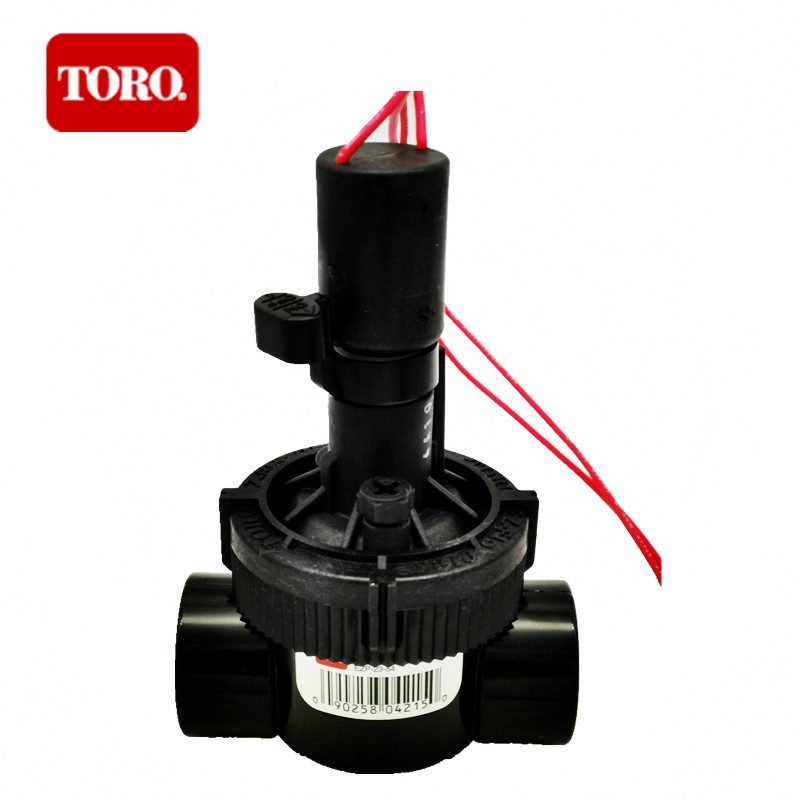
Toro part numbers are precise to the point of being unforgiving, and the EZP-23-5494 reference
is a good illustration of why: a single character in that string can change the body, the coil or
the thread standard, and a substitution that looks close on paper can leave a fitter with a valve
that will not seat.
Why the full string matters
When a system has been in the ground for years, the person ordering is usually working from a
photograph of an old label rather than an original drawing. That is workable, but only if the whole
reference is captured. A partial number is where wrong orders begin — not because anyone was
careless, but because the visible part of a faded label is often the part that does not identify
the variant.
What to capture before enquiring
- The complete reference exactly as printed, including any suffix letters.
- Nominal size, if it is legible on the body — the listing shows one inch.
- The voltage printed on the solenoid, and the type of output feeding it.
- A photograph of the valve in situ, with the pipe either side visible.
Substitution and its limits
A functionally equivalent body from another family will often do the job, and usually at a lower
cost than chasing an exact legacy part. Whether it will depends on face-to-face length, thread
form and coil voltage — the three dimensions that decide whether a swap is a swap or a rebuild. We
confirm those against the datasheet before quoting a substitute, rather than after.
Model names of third-party brands are used for compatibility reference only. Final dimensions, flow and pressure ratings are confirmed against the manufacturer datasheet issued with the quotation.