
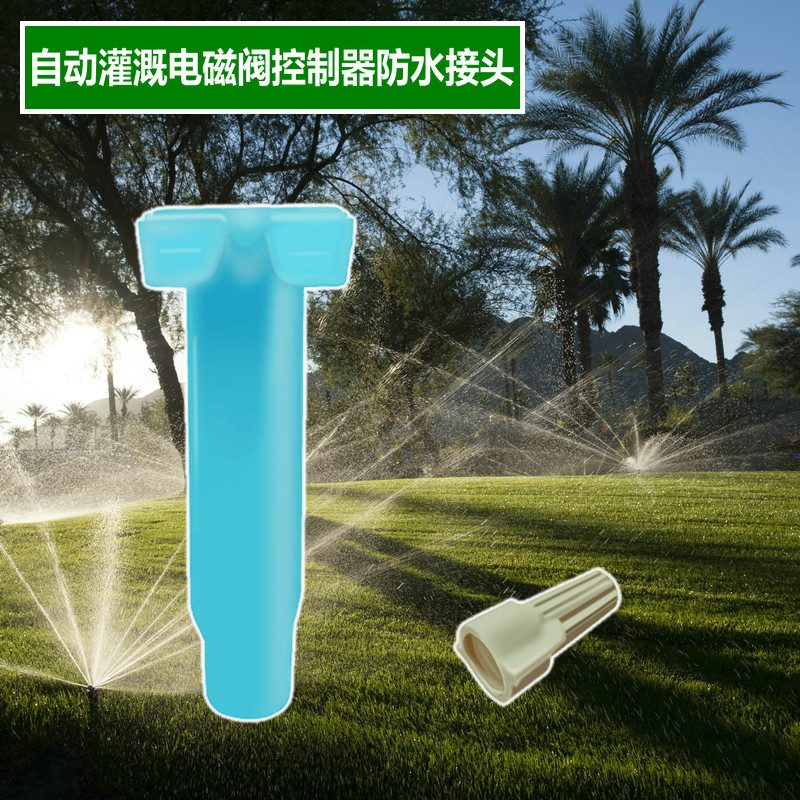
A waterproof connector for joining irrigation control cable. Two conductors, a gel-filled or
resin-sealed body, and a finished joint that survives being buried next to a valve box for a decade.
The part is small and the failure it prevents is not: a wet joint in a decoder or valve circuit
produces a fault that behaves like a broken solenoid and takes hours to find.
Where these are actually used
Every splice on a valve harness, every repair to a cut control cable, and every extension of a
two-wire decoder path. The quantity per project is far higher than most first-time buyers expect,
which is why the per-unit price matters more than the pack price in tenders.
Gel-filled versus crimp-and-seal
Gel-filled bodies are fast and need no tools beyond a crimp, which suits maintenance crews working
in the field. Resin or epoxy types take longer to install and are chosen where the joint is in
permanently wet ground or where the client’s specification demands a fully encapsulated splice. Both
are correct in their place; mixing them on one site usually means the slower type gets used
everywhere and the labour cost doubles.
Getting the joint right
- Strip length matters — too much bare conductor and the gel cannot cover it.
- Do not twist conductors before inserting; the connector’s own contact does the work.
- Test continuity before the joint is closed, not after it is buried.
Quotation
State the conductor size and the number of splices the project needs. Both affect which body is
supplied, and on large projects the count is what drives the price.
Model names of third-party brands are used for compatibility reference only. Final dimensions, flow and pressure ratings are confirmed against the manufacturer datasheet issued with the quotation.